



Stepping into the Open Sonic Space of Modal Jazz
There is a distinct physical sensation when a jazz performance moves from a rush of changing chords into a more open soundscape. The floor seems to settle beneath the band. Instead of being carried rapidly from one harmonic destination to another, the listener is given room to notice the weight of a bass note, the grain of a trumpet tone, or the way a drummer lets a rhythm breathe. Modal jazz does not remove movement, but it changes its scale. The drama comes less from constant harmonic travel and more from colour, pressure, repetition, and release.
That difference matters at a festival, where audiences may be moving between stages, talking with friends, or encountering jazz without a technical background. Standard bebop can be exhilarating, yet its quick chord changes and densely packed improvisation may feel overwhelming when every phrase appears to demand immediate attention. Modal playing offers another doorway. It invites the ear to settle into a landscape before exploring it. The aim here is not to turn listeners into music students, but to make a live set more vivid by showing how a few simple cues can reveal the architecture beneath the atmosphere.
Breaking Away from the Bebop Treadmill
Bebop established much of its identity through speed, precision, and harmonic agility. During the 1940s and 1950s, improvisers developed lines that raced through complex chord progressions, often transforming familiar standards into demanding tests of timing and invention. A soloist had to anticipate each change, outline the right notes, and maintain a compelling melodic shape while the harmony moved quickly underneath. The result could be thrillingly concentrated, with every bar carrying the energy of a conversation at high speed.
Yet the same sophistication could create a creative ceiling. When a performer is constantly negotiating the next chord, the improvisation can begin to resemble an obstacle course. Technical mastery remains impressive, but there may be less space for a note to hang in the air, for a repeated idea to gather emotional force, or for tone itself to become the main event. The broader evolution of the jazz tradition shows how artists repeatedly responded to such limits by changing the relationship between structure and freedom.
Miles Davis pursued that breathing room with particular clarity on Kind of Blue, recorded in 1959. Rather than asking musicians to navigate a dense chain of functional chord changes, the modal approach often supplied a scale or tonal area as a spacious field for invention. The soloist could explore fewer harmonic destinations more deeply, using phrasing, silence, register, and tone to shape the performance. This was not a retreat from sophistication. It was a shift in emphasis, from surviving a sequence of changes to discovering how much emotional detail could exist inside a sustained musical space.
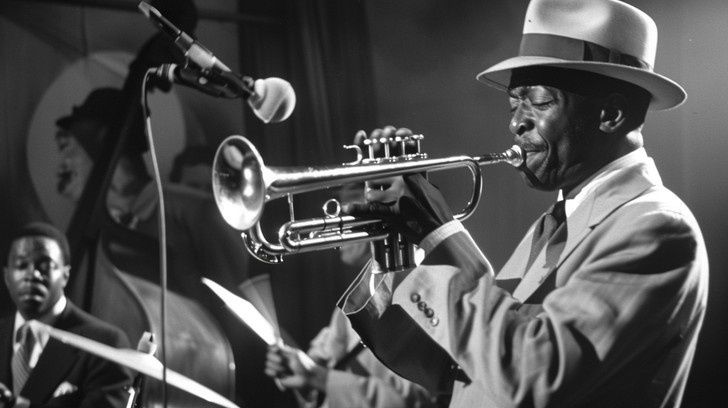
Bebop Harmony Versus Modal Freedom
Functional harmony creates forward motion by making chords relate to one another in a clear sequence. A dominant chord may create tension that seeks resolution, and the speed of those changes strongly affects the body”s response. In modal jazz, a tonal centre may remain in place for much longer. The music can still be tense, but the tension is often created through dynamics, rhythm, texture, and the gradual alteration of a melodic idea rather than through constant harmonic arrival.
| Listening feature | Bebop approach | Modal approach |
|---|---|---|
| Harmonic movement | Frequent chord changes and clear resolutions | Extended tonal areas or sustained modes |
| Improvisational focus | Outlining each chord with fast, precise lines | Developing motifs, tone colours, and spacious phrases |
| Rhythmic impression | Propulsive swing and continuous forward momentum | Flexible pulse, layered patterns, and shifting density |
| Audience sensation | Excitement, alertness, and harmonic surprise | Immersion, suspension, and gradual emotional intensification |
The aesthetic pivot that defined modal jazz unlocked an atmospheric quality that still shapes contemporary stage performances. The contrast is not absolute, since many musicians combine functional and modal ideas within one piece. Even so, the distinction is useful for live listening. If the harmony changes every few seconds, attention is pulled along a route. If the tonal centre remains stable, attention can move inward, following the soloist”s touch, the drummer”s accents, or the band”s changing density.
Four Auditory Cues to Catch at Your Next Gig
Modal music becomes easier to recognise when the ear has a few practical reference points. These cues are not rules, and no listener needs to identify a mode by name. Instead, they provide ways to follow a performance when the harmony feels less obviously busy. At an outdoor festival, where sound travels across a large field and the audience may be listening from different distances, these details can help turn a diffuse impression into an engaging musical map.
- Listen for a pedal point. A bass note or repeated low figure may remain underneath changing melodies, creating a grounded sensation. This sustained foundation can feel almost physical, particularly when the bass and drums reinforce it with restraint.
- Notice melodic plateaus. A soloist may linger around one tonal centre rather than constantly chasing new chord tones. Repetition is not a lack of invention here. A small phrase can be bent, extended, interrupted, and revisited until its emotional character changes.
- Follow the drummer”s freedom. The drums may loosen the expected swing markers, using cymbal colour, sparse accents, polyrhythms, or sudden spaces. The pulse remains present, but it may be felt as a flexible current rather than a strict signpost.
- Watch for a change of colour. A shift to another mode or tonal area can alter the room without producing a dramatic conventional resolution. The band may suddenly sound brighter, darker, more suspended, or more urgent, even when the volume barely changes.
These cues are especially valuable during a long solo. Instead of waiting for a familiar chorus pattern, listen to how the performer handles time. Does a phrase become more spacious? Does a repeated note gain force because the rhythm section changes around it? Does the drummer move from a soft shimmer to a more insistent pattern? Such questions place the listener inside the performance rather than outside it, judging whether every moment is technically fast enough.
In a live setting, modal harmony also makes silence meaningful. A pause can expose the room, the reverberation of a venue, or the anticipation of an audience. When the band returns to the tonal centre, the effect may resemble a change in lighting: not a new destination, but a newly revealed surface. Festivalgoers can test this approach from the first song, listening for the relationship between stillness and motion before the set gathers full intensity.
From Late-Night Tents to Contemporary Festival Stages
Modal openness now travels well beyond the classic jazz club. UK jazz artists and international festival programmers frequently place improvising instrumentalists alongside electronic producers, broken beat musicians, soul artists, hip hop acts, house DJs, and Afro-diasporic rhythm traditions. At We Out Here, the programme is known for bringing genre pioneers and emerging artists into the same broad cultural conversation, with jazz presented alongside electronica, house, afro, soul, and related styles. The festival”s next edition is scheduled for 19 to 22 August 2027 at the grounds of Wimborne St Giles in Dorset, with music joined by family, wellness, and wider cultural activities.
That kind of programming makes modal thinking easy to hear in a new context. A sustained synth pattern, a repeating bass figure, or a broken beat loop can perform a similar structural function to a jazz pedal point. The audience enters a shared rhythmic field, and small changes in texture begin to matter. In an open-air venue, this can produce a communal, almost trance-like effect, especially after sunset, when a repeated harmonic centre gives the surrounding movement a sense of focus.
Selectors and instrumentalists return to modal structures because they offer both stability and possibility. A DJ can layer percussion, vocal fragments, and electronic colour without forcing every element through a busy harmonic sequence. An improviser can stretch a phrase across the groove, answering the rhythm rather than racing to keep up with chord changes. For listeners, the result is a useful bridge between jazz history and the current festival landscape: a reminder that musical freedom can come from simplifying the ground beneath the performance.
Tune Your Ears to the Space Between the Notes
Modal jazz is an invitation to slow down without becoming passive. Its spaciousness encourages attention to texture, contour, breath, and emotional weight. A sustained note can matter as much as a rapid run. A drummer”s decision to leave space can create as much tension as a full rhythmic barrage. The music may appear less crowded, but that openness gives each gesture more room to register.
At the next live date, try following mood before terminology. Notice where the band feels grounded, where the tonal colour darkens or brightens, and how a soloist turns a small idea into a larger emotional shape. Whether the performance unfolds in an intimate room, a late-night tent, or a wide Dorset festival field, modal listening offers a fresh mindset. Jazz becomes less a test of how many changes can be recognised and more an experience of how sound inhabits time.