



When Victorian Seaside Rotundas Met the Roar of Syncopation
Britain”s seaside musical tradition grew alongside the Victorian coastal escape. Railway expansion made resorts increasingly accessible to the expanding middle class and to working people enjoying organised holidays, bank holidays, and shorter working hours. Fishing villages became pleasure destinations, while gardens, piers, promenades, theatres, and pavilions offered a carefully arranged mixture of fresh air, recreation, spectacle, and sociability. Music was central to that experience. It gave the promenade a sense of occasion, encouraged people to linger, and turned a public garden into a shared civic stage.
Bandstands were among the most recognisable symbols of this new leisure culture. Their decorative ironwork and elevated platforms initially suited military marches, ceremonial brass, and light orchestral medleys, all delivered within the moral and social framework of the respectable resort. Yet seaside culture was never static. During the early twentieth century, ragtime, jazz, and swing brought new accents to the coast. Rhythms once associated with theatres, dance halls, and gramophone records began to travel across lawns and promenades, carried by brass sections whose energy could compete with the surf. The Victorian rotunda had become an acoustic cradle for modern popular music.
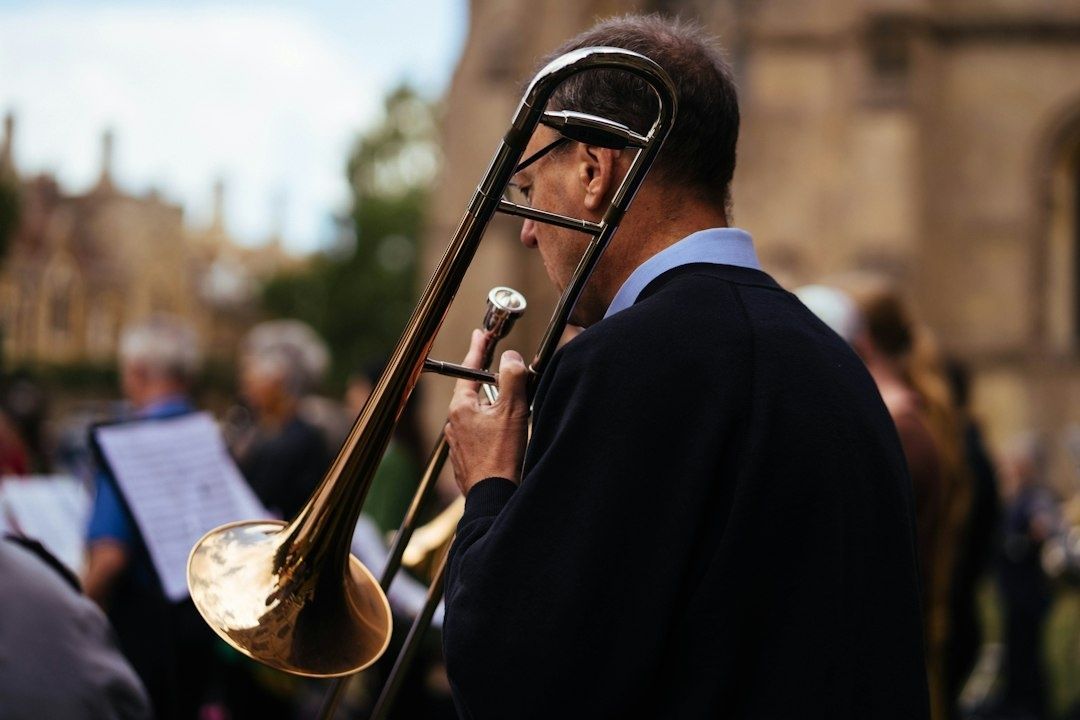
The Acoustic Marvel of Cast Iron by the Waves
A traditional bandstand was both architecture and instrument. The raised octagonal or circular stage gave performers visibility above the crowd, while a domed canopy helped direct sound outward and downward. Cast iron columns, filigree panels, decorative brackets, and painted timber details created an ornamental civic landmark, but the structure also served a practical purpose. It separated the musicians from foot traffic, protected instruments from light weather, and provided a partial sounding board in an environment where wind could scatter delicate musical detail.
Coastal performance was never acoustically simple. Open lawns absorbed some frequencies, waves supplied a constant low roar, and breezes could carry high brass notes away from one side of an audience while leaving another side in relative quiet. A canopy could not eliminate those problems, but it helped focus the ensemble and gave the sound a defined centre. The result was not the controlled clarity of a concert hall. It was something more atmospheric, a blend of projection, movement, and environmental sound in which a trumpet call might seem to arrive with the salt air.
The repertoire evolved with the audience. Small brass groups and municipal ensembles could play marches, classical overture transcriptions, popular songs, and arrangements designed for instruments such as two B-flat trumpets, French horn, trombone, and tuba. As jazz and swing gained influence, those same instruments could articulate sharper syncopation, heavier accents, blues inflections, and layered rhythmic figures. Repertoire collections now place classical works by Handel, Mozart, Verdi, Haydn, and Tchaikovsky alongside arrangements connected with Louis Armstrong, Duke Ellington, Count Basie, Glenn Miller, Miles Davis, and Cole Porter, illustrating how flexible brass instrumentation became across styles.
- Projection: the elevated stage and canopy helped carry melody above lawns, promenades, and seaside noise.
- Visibility: the open design allowed holidaymakers to watch instrumentalists as well as hear them.
- Adaptability: the same space could accommodate marches, light classics, dance arrangements, brass-band repertoire, and jazz.
- Resilience: durable ironwork suited public gardens exposed to wind, rain, and the demanding rhythm of seasonal use.
That relationship between coastal engineering and public entertainment is part of a wider municipal story. Comparable resort narratives, including the official History of Rehoboth Beach, show how seaside communities developed durable public spaces in response to weather, tourism, and changing habits of recreation. Exploring documented coastal heritage shows how seaside communities developed durable public spaces in response to weather, tourism, and changing habits of recreation. British bandstands belonged to the same broad tradition of building civic structures that could withstand the elements while giving everyday visitors a memorable setting for music.
Democratising the Swing Era for Everyday Holidaymakers
The great achievement of the seaside bandstand was accessibility. Jazz could flourish in exclusive hotels, theatres, and dance halls, but the outdoor concert placed live music directly in the path of ordinary holidaymakers. No formal evening dress was required, and the audience did not need specialist knowledge. A family could arrive with a picnic, a couple could hire deckchairs, and a day-tripper could pause beside the railings for a single number before continuing towards the pier. Music became part of the geography of the holiday rather than a separate cultural appointment.
This changed the social life of the promenade. Deckchair audiences listened in shifting groups, with some visitors seated for an entire programme and others drifting in and out as the afternoon developed. Children moved between the lawn and the bandstand, while adults responded to familiar melodies, dance rhythms, and the spectacle of a full ensemble working in the open air. The setting encouraged spontaneous participation. Even when dancing was not formally organised, swing rhythms could animate the space, turning a municipal performance into a temporary social ballroom without walls.
The contrast between earlier ceremonial programming and the swing-era outdoor phenomenon can be understood through the changing role of performer and audience:
| Victorian ceremonial performance | Communal swing band performance |
|---|---|
| Focused on marches, light classics, and formal presentation | Expanded towards ragtime, jazz standards, dance tunes, and popular arrangements |
| Audience primarily listened from a respectful distance | Audience responded through movement, conversation, dancing, and informal participation |
| Bandstand reinforced civic order and respectable leisure | Bandstand became a meeting point for mixed ages and social groups |
| Music often marked ceremony or scheduled entertainment | Music shaped the atmosphere of the entire promenade and holiday day |
The outdoor format also helped brass music retain a powerful public identity during periods when recorded music and indoor entertainment were expanding. A well-programmed bandstand series could introduce listeners to arrangements associated with big bands while preserving the visual drama of live musicians. The force of a coordinated brass section, the physical movement of players, and the resonance of a tuba or trombone in the sea air created an experience that a gramophone could suggest but not reproduce.
Bournemouth to Poole and the Living Legacy of South Coast Brass
On the South Coast, Bournemouth offers one of the clearest living connections between formal Victorian garden culture and contemporary brass performance. Its Lower Gardens provide an attractive setting for open-air concerts, with the Pine Walk Bandstand representing the enduring appeal of music placed within a landscaped public route. The location matters as much as the structure. Visitors encounter performance while moving between the town centre, gardens, seafront, and surrounding attractions, making music part of a wider coastal itinerary rather than an isolated ticketed event.
That tradition remains visible in performances by visiting and local ensembles. Reading Spring Gardens Brass Band, which later went on to celebrate its milestone 125th anniversary and qualify for the National Brass Band Championships of Great Britain in 2024, brought its traditional concert sound to Bournemouth”s Lower Gardens on a sunny Sunday afternoon in June 2018. Such appearances demonstrate the continuing exchange between regional banding communities and seaside audiences. High-calibre musicianship can be heard by dedicated followers, casual visitors, families, and tourists who may have arrived simply to enjoy the gardens.
Modern programming around Bournemouth, Christchurch, and Poole also places bandstand music within a broad summer calendar. Council-promoted events have included live music, festivals, fireworks, quayside celebrations, and performances at the Lower Gardens Bandstand. In that setting, brass is not treated as a museum piece. It shares the seasonal landscape with markets, harbour activities, family entertainment, and community gatherings, preserving the old seaside principle that public music should belong to the whole day.
- For heritage listeners: seek traditional brass-band concerts, marches, hymn arrangements, and carefully scored light music.
- For jazz followers: look for swing bands, New Orleans-inspired groups, and programmes built around improvisation.
- For families: choose daytime garden or quayside performances where audiences can move freely and combine music with other activities.
- For visitors: check current council listings before travelling, since seasonal programmes, performers, and locations vary from year to year.
The broader setting is supported by active public stewardship. The Bournemouth Gardens programme reflects how civic parks continue to support leisure, culture, and local heritage. For audiences, that means a concert can be approached as part of a complete coastal day, with time for the gardens, the promenade, nearby public spaces, and the changing light over the water.
How Modern Ensembles Reclaim Historic Bandstand Stages
Contemporary ensembles approach historic bandstands with a wide musical vocabulary. One programme may move from a New Orleans street-jazz number to a Glenn Miller classic, then into a modern brass-band work shaped by contest traditions. Others combine polished concert arrangements with improvisational passages, allowing musicians to acknowledge the past without treating it as a fixed script. The bandstand is particularly well suited to this mixture because its public character welcomes both formal presentation and spontaneous energy.
Restoration is equally important. Many bandstands disappeared or deteriorated during the second half of the twentieth century, when changing leisure habits, maintenance costs, and redevelopment placed pressure on public music spaces. The revival of community concerts, youth ensembles, and open-air series has helped demonstrate their continuing value. Recent ensemble histories also show how musicians adapted after the Covid-19 period, moving from home-recording projects and socially distanced groups back to full rehearsals, tours, and open-air performances in places including Poole and Bournemouth.
- Check the programme carefully: distinguish between a traditional brass concert, a big-band evening, a jazz ensemble, and a mixed community bill.
- Arrive with the setting in mind: open-air concerts may involve lawns, deckchairs, changing weather, and natural background noise rather than auditorium-style seating.
- Listen for the arrangement: notice how trumpets carry the melody, how trombones add weight and colour, and how rhythm sections or low brass shape the music”s momentum.
- Support the performers: free concerts depend on public support, donations, attendance, volunteering, or local sponsorship.
- Follow official listings: confirm current dates, access information, weather arrangements, and any seating guidance before setting out.
Catching the Rhythmic Sea Breeze at Your Next Coastal Concert
Britain”s seaside jazz heritage was not created by a single style or generation. It emerged from the meeting of Victorian municipal ambition, railway-enabled tourism, decorative ironwork, brass-band discipline, and the liberating pulse of ragtime, jazz, and swing. The bandstand gave those forces a common platform. Its canopy helped music travel across open lawns, while its public setting allowed listeners from different backgrounds to share the same rhythm, whether seated in a deckchair, standing beside the promenade, or passing through the gardens on a summer afternoon.
That cultural formula still works because it offers something both immediate and historically rich. A free or accessible concert in a coastal garden connects modern improvisation with older traditions of public leisure, craftsmanship, and civic pride. For the next seaside performance, bring a deckchair or picnic where permitted, check the official programme, arrive early enough to appreciate the setting, and give close attention to the musicians who keep these stages alive. When brass rises above the sound of the surf, the Victorian rotunda becomes more than a relic. It becomes a living invitation to hear the coast in rhythm.